


Hair health
FREE US MAINLAND SHIPPING OVER $50 · 14-DAY RETURNS
FREE US MAINLAND SHIPPING OVER $50
Single clips
 Every clip sized in inchesAll claw clipsShop all
Shop by hair type
Not sure?
Find your size
Sizes go by the longest side of the closed clip. The guide compares all five, in inches.
Open the size guideClaw clip sets
Sets, already matched.
Each set holds clips picked for one hair type.
Shop all setsMix any single clips, sizes and colors.
Topics
All guides
Hairstyles
Claw clips are not named in dermatology guidance, but tight, repeated pulling is. What can cause breakage or a headache, what generally reduces it, and when to see a dermatologist.
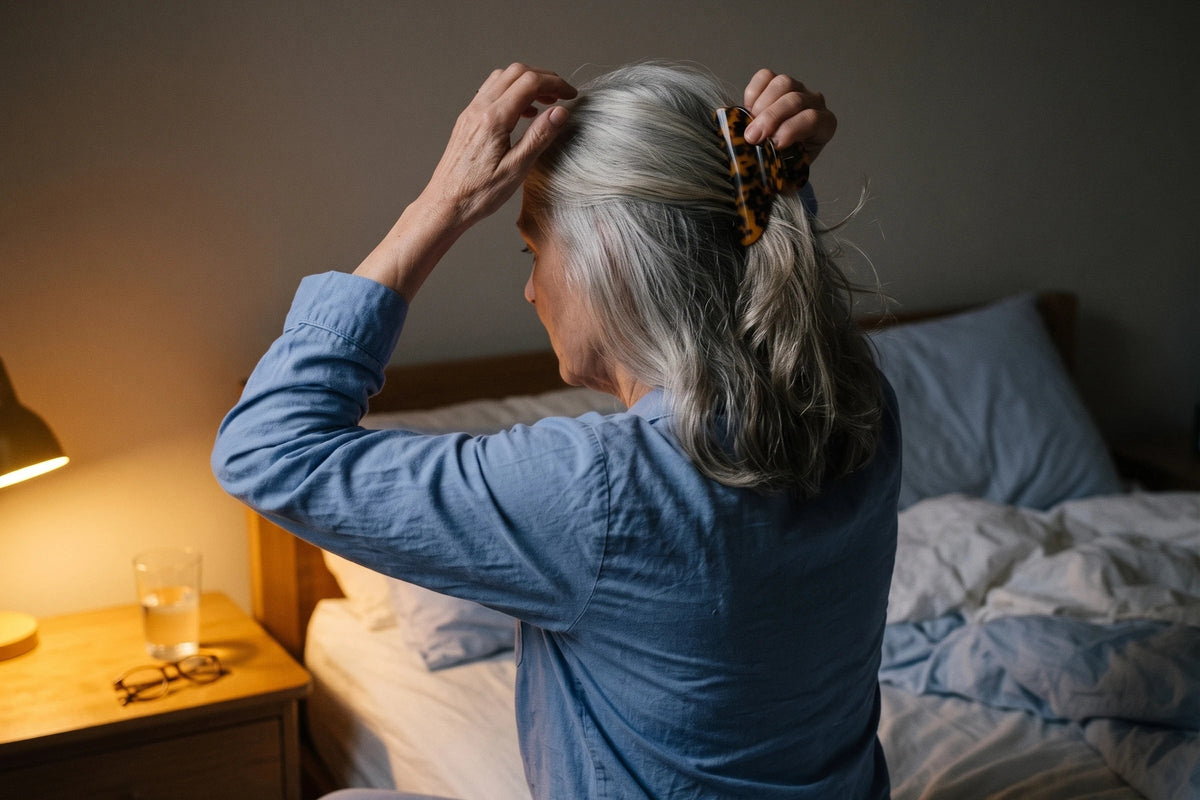
Whether claw clips are bad for your hair depends on how you wear one. The dermatology guidance we checked does not name claw clips, but it is clear that any style that pulls hard on the same hair day after day can break it and, over time, thin it. A clip can do that when it is twisted in tight, worn in the same spot every day, or forced shut over too much hair.
The American Academy of Dermatology (AAD) says that hairstyles that constantly pull on the hair can lead to hair loss. The medical name is traction alopecia. Its list of styles that can cause it when worn too tight includes buns, ponytails and updos.
In its styling advice, the AAD also tells people not to wear ponytails, braids and similar styles continuously. Its reason: these styles pull on the hair, the tension can lead to breakage, and permanent hair loss can develop if the tension continues.
Neither page mentions claw clips, and we did not find a dermatology source that has studied them. So "do claw clips damage hair" is the wrong question to put to the evidence. The evidence is about pull: how much, and how often.
An elastic wraps around a gathered bundle of hair and holds by squeezing it. A claw clip holds a twist against your head with two rows of teeth and a spring. Nothing is wrapped around the hair.

That is not proof that one is gentler than the other, and we found no medical source that compares them. What the two have in common matters more. If you pull the hair tight at the roots before you fasten it, your scalp carries that pull for as long as the style stays in.
Headaches caused by sustained pressure or pulling on the scalp are a recognized category. A 2024 review in the journal Brain and Behavior lists headbands and hairbands among the triggers for the pressure type, and ponytails, braids and heavy hair among the triggers for the pulling type. Claw clips are not named. In principle a clip can do both things: the twist pulls on the roots, and the clip itself presses against the scalp.
A neurologist at Michigan Medicine has explained the mechanism. The hair itself has no feeling, but the scalp it grows from has many pain-sensitive nerves, and pulling on the follicles can irritate them. People prone to migraine or tension headaches are more likely to get this kind of headache, he adds.
The review says the pain generally stops once the pressure or pull is released, and that avoiding the trigger is the only established approach. So the first thing to do is take the clip out. If the headaches keep coming back, talk to a doctor.

None of this makes any hair accessory risk-free. It reduces the known causes of trouble.
Size is about how much hair goes into the twist, and how long it is. A lot of hair, or long hair, makes a thick twist. It needs a wider clip, or you end up forcing a small one shut. Start with claw clips for thick hair.
Fine or thin hair makes a slim twist. In a clip that is too big, it slides, and the usual reaction is to twist tighter so the teeth have something to hold. A smaller clip avoids that. See claw clips for thin and fine hair.
The full range runs from Mini to XL.
The AAD says to change your hairstyle right away if you notice pain from tightly pulled hair, stinging, crusts on the scalp, or sections of scalp pulled up like a tent. It lists these early signs of hair loss from pulling:
If you see any of them, or you are losing more hair than usual, see a board-certified dermatologist. The AAD's advice is to go early, because traction alopecia can become permanent the longer it goes untreated. A Johns Hopkins dermatologist who reviewed the research describes it as preventable and says early intervention can stop or even reverse it.
Hair loss also has many causes that have nothing to do with how you wear your hair. A dermatologist can tell which one you have. An article cannot.
No dermatology source we found names claw clips as a cause. The documented cause is repeated tight pulling, which can happen with a clip if the twist is tight and worn the same way every day. A few hairs in the clip are not a sign by themselves: the AAD says shedding 50 to 100 hairs a day is normal.
Two things to check: the twist may be pulling on your scalp, or the clip may be pressing on it. Take it out, then try a looser twist, a different position or a different size. See a doctor if the headaches continue.
It is better to take it out. A hard clip under your head presses on the scalp and keeps the hair under tension all night. More in claw clips, driving and sleep.

You can, but the AAD says wet hair breaks more easily when it is combed or brushed, and advises handling it as little as possible. Let it dry partway and twist loosely.


Keep reading
Hair health
Hairstyles

Hairstyles
Compare
| Product | SKU | Description | Collection | Availability | Product type | Other details |
|---|
Edit option
